Thursday, July 31, 2014

Foodie Pen Pal - Julie from Ann Arbor, Michigan

Hello again!

A couple months ago, I was spending an afternoon enjoying hummus and pitas and dolmas galore at a Greek cafe near my apartment, with my friend Raina*.  Raina is a fabulous person who sews her own clothes, works as an event planner for a historic mansion, and leads Hebrew readings for my church's seder meal during Holy Week.  So, when Raina told me about a program called Foodie Pen Pals, I had absolutely no doubt that it would be a fabulous experience!  And it was!

Foodie Pen Pals is a program organized by the blog The Lean Green Bean - which, is exactly like it sounds.  It's a pen pal program.  With FOOD.  For people who like FOOD, and like trying new FOOD, and eating good FOOD.

Obviously, I was into this idea.

So I signed up to receive a Foodie Pen Pal for July.  I got matched up with a girl named Julie from Michigan.  One of the cool aspects of this program is that you get matched with someone in another part of the country, so that you can include local items as part of your package.  So you can imagine how absolutely bizarre it was that, when I checked out Julie's blog, I discovered that we went to high school together.

Umm, yes.  The girl in Ann Arbor and the girl in Nashville who were matched together had a few classes together in Missouri back in the day.  Weird, right?

Here's a quick run down of the pen pal set-up - both people spend $15 on a box of goodies, then mail it to the other person, resulting in food all around!  I was so excited the day that I got a giant envelope at my door.  Here's what was inside...


We have, from top left to bottom right...


  • Trader Joes "Just Mango Slices" - I have to admit, I was just a bit skeptical of these dried mango slices.  While I love dried fruit, I'm not the biggest mango fan, and the tart chewiness of these little flat strips was a bit disconcerting at first.  But I have to tell you, these little things are awesome.  They have been a GREAT snack item that has been wandering around in a ziploc bag in my purse, and got me through a long no-time-to-eat-dinner-because-of-awkward-timing meeting a few days ago.  
  • Breakfast Banana Cookies - Y'all.  O.  M.  G.  These homemade cookies are dabomb.com (yes, they're so good, they deserve early 2000s slang).  They are made up of oats, bananas, peanut butter, honey, chocolate chips, almonds, and cinnamon.  In her note, Julie wrote that they are "super rich and super filling" and she was ABSOLUTELY right.  I liked them so much that, as soon as they ran out, I made some more from the recipe Julie included.  I having something sweet, filling, and portable as a go-to breakfast option!
  • Cherry Republic "Sour Cherry Patches" - Confession time.  I have been actively rationing these sour-but-sweet little gummy candies because, as soon as I tasted one, I knew that I could instantly eat the whole bag if I wasn't careful.  That being said, I have just eaten about 10 while writing this post.  They're like Sour Patch Kids, but better.
  • Candied Nuts - Julie wrote a lovely little note explaining what all these things were, but of course now that I am writing a post about it, I have misplaced the card.  Oh well.  All I know is that I tossed these in my bag for work as a snack yesterday, pulled them out today, and suddenly the entire bag was gone.  Almonds, I think they were?  I ate them too quickly to remember.  They seemed like almonds.
  • Cherry Republic "Cherry Boomchunka Cookie" - Not sure what a boomchunka is, but I can tell you that we need to have more of them in the world.  It was quite like the Banana Breakfast Cookies, but a pre-packaged situation, and involving cherries.  Delicious.  Since Julie included two items from Cherry Republic, I looked up their website - it's super adorable, and I wish they had one in Nashville!
So I call my first Foodie Pen Pal package a great success!  Now if you excuse me, I need to put these Sour Cherry Patches away before I eat all of them...

*You can find Raina's blog over at The Home Plate.  

Saturday, July 5, 2014

Across the Threshold


The Poster that Hangs in my Kitchen
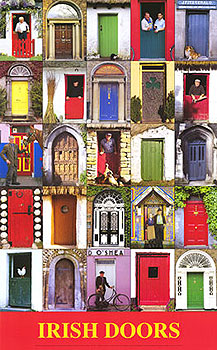
Something I always enjoy when traveling is the different architecture.  Cities always have a certain flavor about them, especially in the more historic areas.  Nashville looks different than Charleston, which looks different than Paris, which looks different than Rome, which looks different than London.  In my kitchen, I have a framed poster that I bought while in Dublin from a cheesy souvenir shop on Temple Bar.  I actually left the shop, then went back 15 minutes later to buy the poster.  It's a collection of photographs of Irish Doors - 25 of them to be exact.  Old Irishmen poke their heads out of some of them, another boasts a liquor license for the week, and all of them are decorated with colorful paint or elaborate lintels.  I'm not a poster person, but I love this particular one.

Today I came across a photo article showcasing "30 Beautiful Doors that Seem to Lead to Other Worlds."  Below are some of my favorites...follow the link to see more!


Rabat, Morocco


Jaipur, India
amazing-old-vintage-doors-photography-41

Toronto, Ontario, Canada


Bali, Indonesia


Germagno, Piedmont, Italy


Northumberland, UK


German Alps

Sunday, June 1, 2014

Fairy Tales: The Cottingley Fairies

Thanks to the wonderful capability of Netflix to provide DVDs of otherwise long-forgotten movies, tonight I watched FairyTale: A True Story, which is a 1997 film about Elsie Wright, Frances Griffiths, and the fairies they supposedly found in the bottom of their family's creek bed.  Being a family movie of the inspirational variety, the fairies are real in this version, and ultimately bring back Frances's missing father for her (who, surprisingly and inexplicably, is played by Mel Gibson in a 30 second cameo).  Obviously, the filmmakers are taking some liberties in calling this a true story - but, the story it's based on is one that is not only true, but fascinating - involving two young girls, Arthur Conan Doyle, and a hoax that wasn't fully debunked until sixty years later, despite its creators being under the age of 16.

In retrospect, I think my first introduction to the Cottingley Fairy story was probably through this FairyTale movie, which came out when I was nine years old.  But recently, I came across a podcast by Stuff You Missed in History Class (my favorite podcast-ers) that covered five historical hoaxes, including these silly little fairies.  The story essentially goes like this - cousins Elsie and Frances often enjoyed playing down by the creek on Elsie's family's property, and claimed that they saw fairies while they played.  One day, they took Elsie's father's camera, and came back with "proof" - a photo of Frances and some fairies dancing by a waterfall.  Over the next several years, the girls produced four more photographs, for a total of five pictures proving the existence of fairies.


File:Cottingley Fairies 1.jpg
1917 - Frances and the Fairies
File:CottingleyFairies2.jpg
1917 - Elsie and a Gnome
File:CottingleyFairies3.jpg
1920 - Frances and the Leaping Fairy


File:CottingleyFairies4.jpg
1920 - A Fairy Offers a Poppy to Elsie

File:Cottingley-sunbath.jpg
1920 - The Fairies and their Sunbath
Because it was the early 20th century and spiritualism and belief in the supernatural were all the rage in England, the girls' photos began circulating around after their mother showed them to a member of the Theosophical Society after attending a lecture on the existence of fairies.  Eventually, they made their way to Sir Arthur Conan Doyle, who visited with Elsie and Frances and wrote an article about them in The Strand, launching the girls and their photos into the spotlight.  The photos were tested many times and were found to have no evidence of being tampered with, and for a period of time that followed, a bunch of people were running around exclaiming the existence of fairies.

Which.  Is.  Awesome.

Not to burst your bubble, but...the photos were faked.  To be honest, I really don't understand why people didn't immediately figure that out, but they were testing for falsified photos in ways that were way above the heads of teenagers - checking for multiple exposures and the like, when in reality, Elsie had copied drawings of fairies out of a storybook onto cardboard, cut them out, and she and Frances stuck them up with hatpins.  I guess the photo experts didn't think of that one?  But then, this was before the advent of Flat Stanley into pop culture, so maybe it didn't even cross their minds.

But what is especially fascinating to me is that the girls stuck by their story for decades upon decades, and didn't confess that they had faked the photographs until 1983 - that's sixty six years after the first photograph was taken!  According to Elsie, everything just got too big to confess that it was all a joke, and the girls were embarrassed to admit the truth with the renowned author of Sherlock Holmes involved in the midst of it.  In her own words, Frances said, "I never even thought of it as being a fraud - it was just Elsie and I having a bit of fun and I can't understand to this day why they were taken in - they wanted to be taken in."  

In the movie, the spin put on why people were so enraptured by the fairy photographs was because, in a country shaken by World War I, the people needed something hopeful and innocent on which to grasp.  And I can see that.  I think we can all admit that discovering the existence of fairies would add some brightness to a world that often gets clouded with darkness.  Even if the photos weren't real, they managed to bring real joy to people, and that's equally valuable.

And in any case, we always have the 90s movie version if we want the story to end differently.  And even to the day she died, Frances insisted that the fifth photograph was not faked.  So who knows...maybe I should take my camera with me next time I go walking by the creek.


Friday, February 14, 2014

French Movie Night - My Afternoons with Margueritte

Happy Valentines Day.  Hopefully you and yours are spending the day in appreciation of the wondrous love which is shared among you.  Personally, I have spent the day eating two slices of Boston Cream Pie in one sitting and watching a documentary on the Amish, but that is neither here nor there.  I also scored a free frappucino by walking into Starbucks with perfect timing to benefit from a mis-prepared order just before me.  Happy Valentines Day to me!

In any case, I have recently come to consider Valentines Day not with the woeful misery that befalls many of us singletons on the 14th, but as a time to appreciate and remember the general love in the world - not just between romantic partners, but among all manner of people.  So it seems a fitting time to write a post that I have been meaning to write for some time, about a French film called My Afternoons with Margeuritte.

The French title for the film is actually La Tete en Friche, which for all my foreign language prowess I had a bit of a hard time understanding.  The best translation I can come up with is "The Fallow Mind," which obviously requires an understanding of agriculture to fully grasp.  No wonder the English translators came up with a more universal name...I assume that the French may have an idiomatic familiarity with en friche that isn't easily translated to English.

The film centers on an unlikely friendship that is forged between Germain, a hulking uneducated man in rural France, and Margueritte, a delicate elderly woman with a penchant for literature.  Germain and Margueritte meet in the park one day, where they are both engaged in the unusual task of counting pigeons, making sure that none of the 19 birds are missing from the flock.  They strike up a conversation when Margeuritte, quoting Albert Camus, challenges Germain to imagine a town without pigeons, which Germain adamently says couldn't exist.  Every day following, Germain, who cannot read, meets Margueritte in the park and she reads to him.  And so the illiterate Germain suddenly becomes familiar with the great works of French literature, explores the dictionary that Margueritte gives him ("You travel with a dictionary, from one word to the next, to our dreams..."), and their friendship develops a deep bond of love that makes the two nearly inseparable.  So much that, when Margeuritte is moved to a nursing home in another city due to failing vision and financial difficulties, Germain busts her out jailbreak-style in one of the most enjoyable movie moments I've seen in French cinema.  It's a wonderful little movie, full of raw emotion, classic literature, and the oft-necessary reminder that love can be found anywhere.

Happy Valentines Day!

"It's not a typical love affair, but love and tenderness, both are there.  Named after a daisy she lived amongst words, surrounded by adjectives in green fields of verbs.  Some force you yield to.  But she, with soft art, passed through my hard shield and into my heart.  Not always are love stories just made of love.  Sometimes love is not named, but it's love just the same.  This is not a typical love affair; I met her on a bench in my local square.  She made a little stir, tiny like a bird with her gentle feathers.  She was surrounded by words, some as common as myself.  She gave me books, two or three.  Their pages have come alive for me.  Don't die now, you've still got time, just wait.  It's not the hour, my little flower.  Give me some more of you.  More of the life in you.  Wait.  Not always are stories just made of love.  Sometimes love is not named.  But it's love just the same." - Gerard Depardieu's character, Germain, about Gisele Casadesus's character, Margueritte...with two t's.


Friday, January 17, 2014

French Kitchen: Tartiflette!

I don't know about you, but I love me some cheese.  And some bacon.  And some potatoes.  So Rachel Khoo's Nids de Tartiflette recipe is right up my alley.

According to the recipe introduction, tartiflette was the brainchild of the makers of Reblochon cheese as a way to promote their cheese with an easy, hearty recipe that would increase their sales.  Personally, I'm not sure why this was necessary, because Reblochon cheese was my absolute favorite during my time studying in Paris.  It's a bit more pungent than other creamy soft cheese, and unfortunately it's not available in America.  Apparently it doesn't pass the USA's pasteurization requirements.  Part of me feels like I should be freaked out by that, but instead I just lament the fact that I can't buy Reblochon at my local supermarket.

I can, however, find Camembert, so that will do nicely.

This recipe didn't have a ton of ingredients, and really didn't rely heavily on adding spices.  But then when you're working with cheese, wine, and bacon, you're pretty well guaranteed some excellent flavor.  Here are the components of my tartiflette: potatoes, onion, butter, bay leaf, white wine, Camembert, garlic, and thick-cut bacon.


Another reason I was excited for this recipe was that it gave me an opportunity to use my brand new mandolin slicer.  A mandolin is essentially a very sharp blade which cuts food into thin slices by drawing the food back and forth across the blade using a hand guard.  It's an awesome little contraption.  I cut a ton of potato slices in very little time.  For this recipe, I used one and a half potatoes.  The recipe said to peel them, but I am bad at peeling things and impatient with my lack of skill, so I just left the skin on.  Ultimately, I ended up cutting the thin rounds into horizontal slices for more of a julienne-style cut.


After that was done, I diced an onion and sliced the bacon, and threw it all in a frying pan with the garlic and bay leaf.  The recipe called for something called lardons, which are cubes of streaky bacon with a prosciutto-like taste.  A quick Google search in the store told me that it's hard to find lardons in America, so I substituted some thickly cut bacon strips.  


Meanwhile, it's time to tackle the Camembert!  Yet another reason I was excited to make this recipe is because it incorporated Camembert into the potato bake.  Although I love French cheese, I always eat it simply - a small, cold slice on a cracker or piece of bread.  The thought of chopping up a whole Camembert round into little cubes and tossing it into a recipe to become all melty and delicious is completely irresistible.


Once the bacon has turned golden around the edges, add some white wine and continue to cook until the wine has reduced down to just a couple tablespoons.  Take off the heat, and stir in the potatoes and cheese.  Pro-tip: remove the bay leaf before you add all the potatoes...it took me several minutes to find it!


Rachel Khoo styles her tartiflette in little nests using a muffin tin (this is the nids part of the name nids de tartiflette).  Butter the muffin cups first, or the potatoes will stick, and overload the cups, because the tartiflette cooks down a bit.  The recipe seemed to indicate that it would only make six nests - but that must be assuming a larger muffin tin than I own because, as you can see, I definitely filled all twelve of my pan's little cups.


Pop it in the oven, wait 20 minutes, and voila!  Tartiflette hot from the oven.


Unfortunately, my little nests didn't hold their shape very well once they were taken out of the pan - but it didn't even matter.  This is absolutely one of the most delicious things I've ever made.  It's some serious comfort food, and perfect for a chilly winter evening.  The wine adds a sophistication of flavor that is lacking in American-style hash browns, and the Camembert cubes melt down into delicious gooey morsels of cheesy goodness.  Seriously - it's incredible.


So there it is!  Tartiflette.  An awesome meal with an awesomely fun name.  I served mine up with another recipe from Rachel Khoo - carrot salad, which basically involved mixing carrots and apples with a vinaigrette made from white wine vinegar, olive oil, grainy mustard, sugar, salt, and pepper (which is a super easy and delicious way to serve carrots, by the way).  I was wonderfully satisfied with this dinner.  Another victoire de cuisine francais! 

Wednesday, January 8, 2014

French Kitchen: Bouillon de Poulet avec des Quenelles de Volailles

Welcome back!

In the vein of yesterday's dreamy love letter to French cuisine, I would like today to write the post which I originally intended to write yesterday - a culinary tale of French food made in my American kitchen.  On the menu for today's post: Bouillon de Poulet avec des Quenelles de Volailles.  Or, Chicken Dumpling Soup.

I feel like there are few things which are more down-home American than Chicken and Dumplings.  And yet somehow, when I began flipping through Rachel Khoo's The Little Paris Kitchen cookbook, this was one of the first recipes that drew my eye and caught my interest.  I think the reason it intrigued me was because of the dumplings, or quenelles - unlike the American versions of flat noodley concoctions or mounds of floating Bisquick, these dumplings were finely shaped little creatures, derived from flipping the dumpling back and forth between two spoons before gently gliding the dumpling into the boiling stock.  What's more, the chicken was all mashed up inside the breading of the dumplings...meaning that the dumplings were, in fact, chicken dumplings.

So I gathered all my ingredients together and proceeded to begin with the journey.  As I said yesterday, despite the wonders attributed to French food, the ingredients they use aren't all that different from those found in your average American grocery store.  Today we have: White bread, eggs, chicken breast, carrots, nutmeg, parsley, salt, mushrooms, chicken stock, salt, and half and half.  Please ignore the Royal Wedding Commemorative Tea Tin in the background of the photo (or celebrate it's kitschy glory, if you prefer - in fact, that's the option you should choose.)


First thing to do is to chop up some carrots.  The recipe called for two carrots, diced.  Pro-tip: if you don't want to buy big carrots, buy baby carrots and line them up to look like normal carrots to figure out how many you need to use.

That'll do.

Next, get some chicken stock a'boiling, and dunk those carrots right on in there.


Meanwhile, it's time for the fun part - blending almost all the other ingredients together into a gooey mess of chickeny-eggy-bready wonder.  Toss about 1 chicken breast, one egg plus one egg yolk (separating eggs for the win), a piece of bread without crusts, some half and half, a pinch of nutmeg, a teaspoon of salt, and a pinch of pepper into the blender.  And then blend it up.  Blend that baby up real good.


Now if you, like me, have a sub-par blender, this might actually be kind of tricky.  The ingredients are supposed to combine to form a sticky paste-like dough, which kind of gets stuck in the blades and causes it not to blend too easily.  I found that mixing things around with a wooden spoon handle and shaking the pitcher back and forth like a lunatic in between blending helped overcome this difficulty.

After everything is blended and pasty, it's time to make the quenelles!  Basically, you take a spoon in each hand, pick up some of the dumpling dough, and scoop the dough back and forth from spoon to spoon until it makes a nice little oval.  Unfortunately I don't have a photo of this part because I, like most humans, do not have three hands.  But here's a video showing the general idea...


By this point, the boiling chicken stock should have made the carrots tender enough for a soup.  As you shape each quenelle, drop it gently into the (still boiling) soup.  It will sink to the surface at first, and then rise up all nice and fluffy once it's cooked, about five minutes later.  After all the quenelles seem to be floating merrily along, toss in some sliced mushrooms to finish things off.  Let it cook just a bit more to tenderize the mushrooms a bit.

RISE, my dumplings, RISE!

And voila! Plate things up, sprinkle on some parsley, and you have for yourself a lovely chicken soup with some happy little quenelles French-ing things up.  I served mine with a simple cranberry and blue cheese salad with a bit of olive oil.  It made for quite the pretty little meal.


The quenelles were fascinating little things.  The texture wasn't at all like American dumplings - it was quite sponge-like and springy.  You could obviously taste the chicken, but you couldn't see it at all.  Essentially, you have on your hands some little chicken breads.  It was a bit unusual at first, but, after the surprise of the first bite, they're quite good.  The nutmeg really adds a depth of flavor to the dumpling.  In fact, I've cooked several French recipes now, and there always seems to be some nutmeg involved.  Perhaps we have discovered the French secret to culinary greatness.


So there you have it!  Quenelles de poulet, brought to you by my Tennessee apartment kitchen.  See you next time for more cultural escapades!

Tuesday, January 7, 2014

Baguettes and Brie - The Allure of French Food

One of my favorite things to do is read cookbooks.  I find it intellectually fascinating.  I like cooking too, obviously, but in the chaos of daily life I often find myself falling into a restaurant and take-out rut.  Besides being expensive, this unfortunate habit also causes me to lose out on one of my favorite hobbies in the name of laziness, unhealthy cravings, and a desire to eat a delicious variety of foods.

But delicious foods of varying cuisines aren't limited to the restaurant world - people cook all over the world, and with relatively the same basic tools and ingredients.  Everyone has eggs.  Everyone has meat.  Everyone has produce.  What makes international cuisines different from one another isn't the tools, it's the technique.  And usually, it's the spices.

When I was a junior in college, I studied in Paris for four months.  During this time I lived with a host mother who cooked dinner for me and my other American housemates several times a week.  French food is notoriously wonderful, the height of culinary excellence, and tres fancy.  I was excited to see what my French host mother would cook up for dinner each night.  She rarely disappointed - the meals were delicious and varied widely from one another.  But what was fascinating to me was that I couldn't figure out why the food was so good.  Most of the ingredients that crossed my plate were familiar - and yet they tasted wonderfully different and delicious.  At the time, my own cooking skills were limited.  For example, that same semester I made dinner with my housemate, and somehow produced startlingly high flames while cooking ham in a frying pan.  For obvious reasons, my housemate oversaw the remainder of the meal.

Being therefore a culinary novice, I chalked up the taste difference between French and American cuisine to the food being fresher.  The French people buy fresh bread every day at the local bakery, buy cheese at the cheese store, buy meat from the butcher, and so forth.  These are a people who take their food seriously.  Certainly, bits of processed food have begun to infiltrate French society.  My host mother stocked Chocolate Special K cereal in her cupboard for breakfast, and the TV regularly played ads for sugary snacks (though these came equipped with an official Surgeon General's Warning that advised, "For your health, avoid snacking in between meals".)  But the French take pride in their culinary heritage, and this is reflected in the local restaurants as well as the day to day life of the French people.

It's been 5 years since I studied abroad in Paris, and my cooking skills and intellectual interest in culinary styles and techniques have both increased immensely since then.  So you can imagine my delight when, this Christmas, I unwrapped "The Little Paris Kitchen: 120 Simple but Classic French Recipes" by Rachel Khoo.  This beautiful cookbook provides simple to follow, non-intimidating recipes with full page photos of each dish.   I discovered Rachel Khoo, and this cookbook's existence, through her Cooking Channel TV Show of the same name.  The recipes found in the cookbook are based on those she prepared in a tiny restaurant she operated out of her studio apartment - meaning that the recipes were created and cooked entirely with two gas burners and a miniature oven.  Watching the show, I was fascinated to see the food that a woman of similar age to myself was able to produce from such a small kitchen...and I thought to myself, "Surely I can cook food like the French, too..."  And it turns out that I could!  I'm beginning to discover that a lot of French cooking has to do with the way the food is cooked, not the ingredients being used.  Perhaps culinary excellence in day to day life is not so far off as we Americans often imagine...

I have successfully prepared three recipes from Rachel Khoo's book so far, and I am absolutely loving it.  Each has turned out deliciously, and tasting very much like the food my Parisian host mother prepared for me five years ago.  In future posts, I plan to recount my experiences cooking the various recipes, complete with photos and tales of tribulation encountered en route to culinary victory.  In fact, that was the original intent for this post, but I seem to have gotten caught up in dreams of a land where food is meant to be savored, where the smell of fresh bread wafts through the streets even before the city wakes up, and where a particular sauce and a pinch of nutmeg make all the difference.

So I will leave you here to dream your own culinary dreams.  Check back soon for more French cooking adventures!